---
title: "Pool Exercise for Back Discomfort: A Gentle Way to Improve Hip Rotation"
description: Improving hip and back discomfort and strength gently with water aerobics exercises
image: https://blog.h2owear.com/hubfs/Blog%2031%20Reach.png
---
- [Home](https://www.h2owear.com/)
- [My Account](https://www.h2owear.com/customer/account/)
- [My Wishlist](https://www.h2owear.com/wishlist/)
- [My Cart](https://www.h2owear.com/checkout/cart/)
- [Checkout](https://www.h2owear.com/checkout/)
- [Log In](https://www.h2owear.com/customer/account/login/)
- [Create An Account](https://www.h2owear.com/create-an-account)
- [Order Status](https://www.h2owear.com/customer/account/)
- [Sizing Chart](https://www.h2owear.com/size-chart)
- [Shipping & Returns](https://www.h2owear.com/shipping-returns/)
- [Customer Care](https://www.h2owear.com/customer-care/)
- [Swimwear Care](https://www.h2owear.com/swimwear-care/)
- [FAQ's](https://www.h2owear.com/frequently-asked-questions/)
- [Product Sitemap](https://www.h2owear.com/catalog/seo_sitemap/product/)
- [Category Sitemap](https://www.h2owear.com/catalog/seo_sitemap/category/)
- [Advanced Search](https://www.h2owear.com/catalogsearch/advanced/)
- [Orders and Returns](https://www.h2owear.com/sales/guest/form/)
[](https://www.h2owear.com/)
Ultra Chlorine-Resistant
50+ UPF Sun Protection
1-Year Warranty
[My Account](https://www.h2owear.com/customer/account/login/)
Cart
Search:
Search
- [One-Piece Swimsuits](https://www.h2owear.com/one-piece-chlorine-resistant-swimsuits.html)
- [Ashley Support Tank](https://www.h2owear.com/one-piece-chlorine-resistant-swimsuits/ashley-support-tank.html)
- [Classic Tank](https://www.h2owear.com/one-piece-chlorine-resistant-swimsuits/classic-tank.html)
- [Athletic Support Tank](https://www.h2owear.com/one-piece-chlorine-resistant-swimsuits/athletic-support-tank.html)
- [Scoop Back Support Tanks](https://www.h2owear.com/one-piece-chlorine-resistant-swimsuits/scoop-back-support-tank.html)
- [Scoop Back Support Tank w/ Mastectomy Bra](https://www.h2owear.com/one-piece-chlorine-resistant-swimsuits/scoop-back-support-tank-w-mastectomy-bra.html)
- [DD Support Tanks](https://www.h2owear.com/one-piece-chlorine-resistant-swimsuits/dd-support-tank.html)
- [Ruched Front Support Tank](https://www.h2owear.com/one-piece-chlorine-resistant-swimsuits/ruched-front-support-tank.html)
- [Side Accent Support Tanks](https://www.h2owear.com/one-piece-chlorine-resistant-swimsuits/chlorine-resistant-side-accent-support-tank.html)
- [Harness Back Style](https://www.h2owear.com/one-piece-chlorine-resistant-swimsuits/chlorine-resistant-side-accent-support-tank/chlorine-resistant-harness-back-style-support-tank.html)
- [Scoop Back Style](https://www.h2owear.com/one-piece-chlorine-resistant-swimsuits/chlorine-resistant-side-accent-support-tank/chlorine-resistant-scoop-back-style-support-tank.html)
- [Support Tank with Skirt](https://www.h2owear.com/one-piece-chlorine-resistant-swimsuits/support-tank-w-skirt.html)
- [Zip-Front Support Tank](https://www.h2owear.com/one-piece-chlorine-resistant-swimsuits/zip-front-support-tank.html)
- [Separates](https://www.h2owear.com/seperates-chlorine-resistant-swimwear.html)
- [Unitanks](https://www.h2owear.com/chlorine-resistant-unitanks.html)
- [Aqua Shirts](https://www.h2owear.com/cover-ups/aqua-shirts.html)
- [Neoprene](https://www.h2owear.com/neoprene.html)
- [Fitted Jacket](https://www.h2owear.com/neoprene/fitted-jacket.html)
- [Straight-Cut Jacket](https://www.h2owear.com/neoprene/straight-cut-jacket.html)
- [Vest](https://www.h2owear.com/neoprene/vest.html)
- [Shorts](https://www.h2owear.com/neoprene/shorts.html)
- [Tights](https://www.h2owear.com/neoprene/tights.html)
- [Gloves](https://www.h2owear.com/neoprene/gloves.html)
- [Shoes](https://www.h2owear.com/women-s-shoes.html)
- [H2O Wear Aqua Vibe Water Shoe](https://www.h2owear.com/women-s-shoes/h2o-wear-aqua-vibe-water-shoe.html)
- [Women's RYKA Hydro Sport Shoe](https://www.h2owear.com/women-s-shoes/women-s-ryka-hydro-sport-shoe.html)
- [Accessories](https://www.h2owear.com/h20-accessories-swimwear.html)
- [Mens](https://www.h2owear.com/mens-chlorine-resistant-swimwear.html)
- [Gift Certificates](https://www.h2owear.com/gift-certificates.html)
- [Clearance](https://www.h2owear.com/clearance-chlorine-resistant-swimwear.html)
Categories
- [One-Piece Swimsuits](https://www.h2owear.com/one-piece-chlorine-resistant-swimsuits.html)
- [Ashley Support Tank](https://www.h2owear.com/one-piece-chlorine-resistant-swimsuits/ashley-support-tank.html)
- [Classic Tank](https://www.h2owear.com/one-piece-chlorine-resistant-swimsuits/classic-tank.html)
- [Athletic Support Tank](https://www.h2owear.com/one-piece-chlorine-resistant-swimsuits/athletic-support-tank.html)
- [Scoop Back Support Tanks](https://www.h2owear.com/one-piece-chlorine-resistant-swimsuits/scoop-back-support-tank.html)
- [Scoop Back Support Tank w/ Mastectomy Bra](https://www.h2owear.com/one-piece-chlorine-resistant-swimsuits/scoop-back-support-tank-w-mastectomy-bra.html)
- [DD Support Tanks](https://www.h2owear.com/one-piece-chlorine-resistant-swimsuits/dd-support-tank.html)
- [Ruched Front Support Tank](https://www.h2owear.com/one-piece-chlorine-resistant-swimsuits/ruched-front-support-tank.html)
- [Side Accent Support Tanks](https://www.h2owear.com/one-piece-chlorine-resistant-swimsuits/chlorine-resistant-side-accent-support-tank.html)
- [Harness Back Style](https://www.h2owear.com/one-piece-chlorine-resistant-swimsuits/chlorine-resistant-side-accent-support-tank/chlorine-resistant-harness-back-style-support-tank.html)
- [Scoop Back Style](https://www.h2owear.com/one-piece-chlorine-resistant-swimsuits/chlorine-resistant-side-accent-support-tank/chlorine-resistant-scoop-back-style-support-tank.html)
- [Support Tank with Skirt](https://www.h2owear.com/one-piece-chlorine-resistant-swimsuits/support-tank-w-skirt.html)
- [Zip-Front Support Tank](https://www.h2owear.com/one-piece-chlorine-resistant-swimsuits/zip-front-support-tank.html)
- [Separates](https://www.h2owear.com/seperates-chlorine-resistant-swimwear.html)
- [Unitanks](https://www.h2owear.com/chlorine-resistant-unitanks.html)
- [Aqua Shirts](https://www.h2owear.com/cover-ups/aqua-shirts.html)
- [Neoprene](https://www.h2owear.com/neoprene.html)
- [Fitted Jacket](https://www.h2owear.com/neoprene/fitted-jacket.html)
- [Straight-Cut Jacket](https://www.h2owear.com/neoprene/straight-cut-jacket.html)
- [Vest](https://www.h2owear.com/neoprene/vest.html)
- [Shorts](https://www.h2owear.com/neoprene/shorts.html)
- [Tights](https://www.h2owear.com/neoprene/tights.html)
- [Gloves](https://www.h2owear.com/neoprene/gloves.html)
- [Shoes](https://www.h2owear.com/women-s-shoes.html)
- [H2O Wear Aqua Vibe Water Shoe](https://www.h2owear.com/women-s-shoes/h2o-wear-aqua-vibe-water-shoe.html)
- [Women's RYKA Hydro Sport Shoe](https://www.h2owear.com/women-s-shoes/women-s-ryka-hydro-sport-shoe.html)
- [Accessories](https://www.h2owear.com/h20-accessories-swimwear.html)
- [Mens](https://www.h2owear.com/mens-chlorine-resistant-swimwear.html)
- [Gift Certificates](https://www.h2owear.com/gift-certificates.html)
- [Clearance](https://www.h2owear.com/clearance-chlorine-resistant-swimwear.html)
# Pool Exercise for Back Discomfort: A Gentle Way to Improve Hip Rotation
Published by [H2O Wear Team](https://blog.h2owear.com/author/h2o-wear-team) on May 20, 2026, 12:00:01 AM
Back discomfort rarely comes from one big movement.
More often, it builds over time.
Small turns, reaching, changing direction … The kinds of movements you do every day without thinking.
But when the hips begin to tighten, even a little, those movements can start to feel different. Reaching may feel restricted. Twisting may feel tighter. Something just doesn’t feel quite right.
Your body begins to compensate.
## **Where the Movement Comes From Matters**
Healthy rotation usually begins at the hips.
When the hips rotate well, the spine stays tall and supported, and the core quietly does its job stabilizing the body. But when the hips stop contributing, the lower back often starts doing more of the turning.
Not because it’s meant to — but because it has to.
Over time, that extra work can lead to stiffness or discomfort.
This is one reason the pool can be such a helpful place to practice better movement. The water slows things down and gives your body feedback as you move.
In a [previous article](https://blog.h2owear.com/core-strength-standing-still?utm_source=newsletter&utm_medium=blog&utm_campaign=blog-wavemaker-31-backdiscomfort), we explored how the core stabilizes the body even when you're simply standing still in the water. That same stability helps the hips rotate more efficiently during movement.
One simple water exercise can help people feel the difference almost immediately.
## **A Simple Way to Explore It**
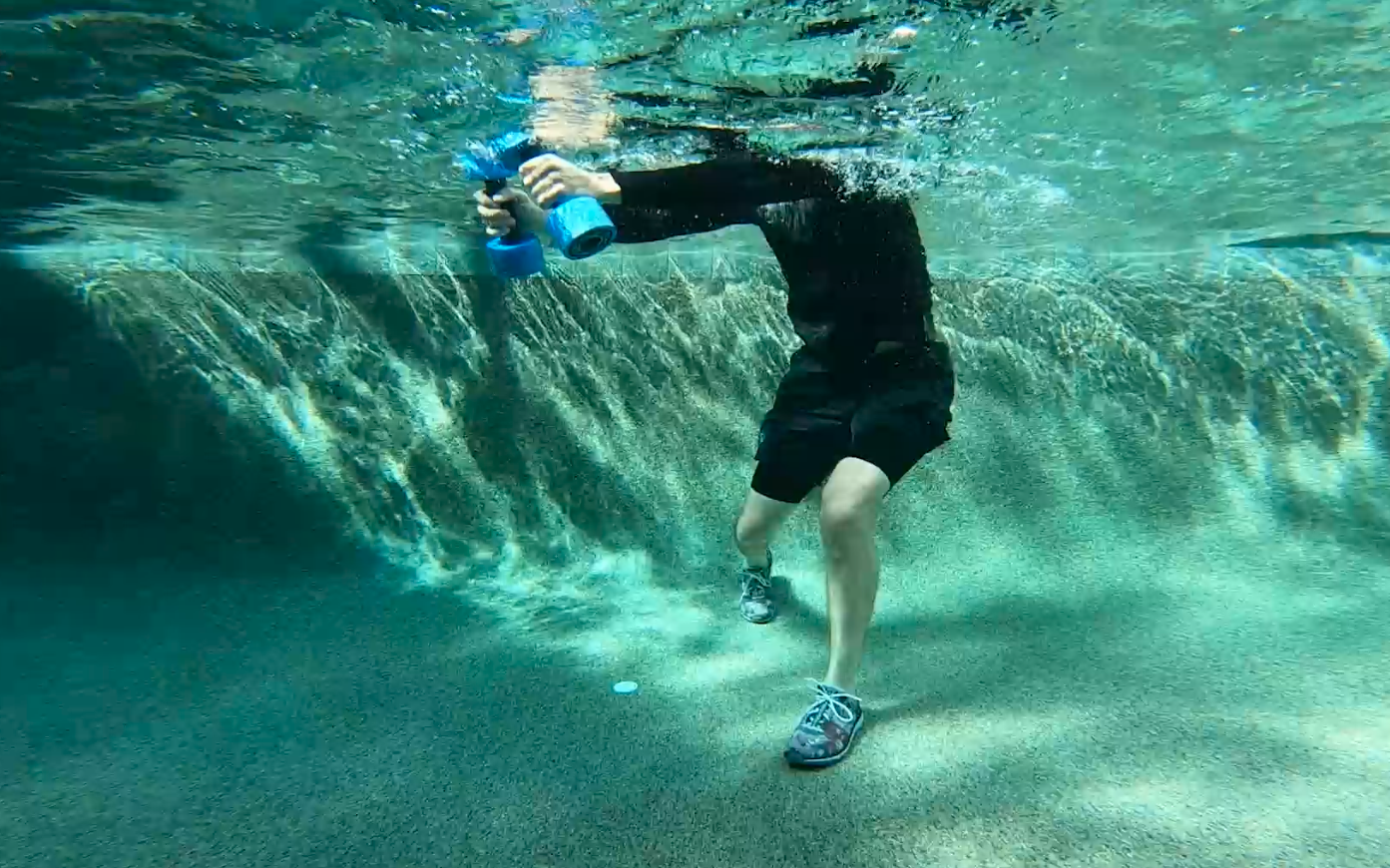
There’s a gentle exercise I often use called *Reach and Pull****.*** It’s simple, but it can change how movement feels very quickly. Here’s how to try it in the pool:
- Using [**small hand buoys**](https://www.h2owear.com/padded-aqua-hand-bars-7-grip-bar.html?utm_source=newsletter&utm_medium=blog&utm_campaign=blog-wavemaker-31-backdiscomfort), reach both arms forward into the water
- Slowly pull the arms wide while keeping your shoulders stacked over your hips
- Then add diagonal reaches “around the clock” — toward 10 and 2, pulling wide after the reach
The movement should feel smooth, unforced and soothing for the hips.
## **What to Notice**
As you move, ask yourself:
- Do my shoulders stay stacked over my hips?
- Does the rotation feel like it’s coming from my hips or my back?
- Does one side feel easier than the other?
There’s no right or wrong here.
You’re simply noticing how your body organizes movement.
## **Slow It Down, Feel It More**
Small hand buoys are one of my favorite tools for this exercise. When you use them, the water pushes back a little more. The movement naturally slows down. And when things slow down, it becomes much easier to feel what’s actually happening in your body.
Many people notice that when the hips begin contributing more to the rotation, the lower back feels less involved (and often more comfortable as a result).
This isn’t about forcing better movement. It’s about giving your body the chance to remember how to share the work.
Your arms move through the water.
Your hips rotate.
Your core stabilizes.
Each part doing its job.
## **Start Gently**
Next time you’re in the pool, try a few slow reach-and-pull movements, and notice what changes.
Because when movement is shared across the body, everything tends to feel a little easier.
Want guided pool workouts that support your back, improve mobility, and rebuild confidence in movement? **Explore [Wavemakers](https://waterexercisecoach.com/) here.**
Tags: [Aquatic Exercise](https://blog.h2owear.com/tag/aquatic-exercise), [Water Aerobics](https://blog.h2owear.com/tag/water-aerobics), [Chlorine Resistant Swimwear](https://blog.h2owear.com/tag/chlorine-resistant-swimwear), [Aquatic Workout Videos](https://blog.h2owear.com/tag/aquatic-workout-videos), [Workout Tips](https://blog.h2owear.com/tag/workout-tips), [spine](https://blog.h2owear.com/tag/spine), [build strength](https://blog.h2owear.com/tag/build-strength), [hip exercises](https://blog.h2owear.com/tag/hip-exercises), [balance](https://blog.h2owear.com/tag/balance)
[Back to Blog](https://blog.h2owear.com)
We Welcome Your Comments Below:
## Related Articles
## [Heart Health That Goes Beyond Cardio](https://blog.h2owear.com/heart-health-that-goes-beyond-cardio)
February is Heart Health Month, and the advice is everywhere: move more.
[Read More](https://blog.h2owear.com/heart-health-that-goes-beyond-cardio)
## [Why a ‘Prep Move’ Makes Cardio Safer & Feel Better](https://blog.h2owear.com/why-a-prep-move-makes-cardio-safer-feel-better)
Here’s something to think about in your next workout: When your effort goes up, your thinking goes...
[Read More](https://blog.h2owear.com/why-a-prep-move-makes-cardio-safer-feel-better)
## [Best Water Exercises for Knee Pain (How the Pool Helps You Move Again)](https://blog.h2owear.com/best-water-exercises-for-knee-pain)
Knee pain changes more than just movement; it changes how you think about movement.
[Read More](https://blog.h2owear.com/best-water-exercises-for-knee-pain)
- Account Information
- [Create An Account](https://www.h2owear.com/create-an-account)
- [Order Status](https://www.h2owear.com/customer/account/)
- [Sizing Chart](https://www.h2owear.com/size-chart)
- [Shipping & Returns](https://www.h2owear.com/shipping-returns/)
- [Customer Care](https://www.h2owear.com/customer-care/)
- [Swimwear Care](https://www.h2owear.com/swimwear-care/)
- FAQ's
- About H2O Wear
- [Our Story](https://www.h2owear.com/our-story/)
- [Contact Us](https://www.h2owear.com/contact-us/)
- [Aqua Partners](https://www.h2owear.com/aqua-partners/)
- [Privacy Policy](https://www.h2owear.com/privacy-policy-cookie-restriction-mode/)
#### H2O Wear is engineered to perform.
Our garments are guaranteed to be chlorine-resistant and give you H2O Wear performance every time you’re in the pool. We offer a wide selection of one-piece swimsuits, sun protection swimwear, swim separates, mastectomy swimwear, fitness swimwear, swim cover-ups, neoprene swim gear and aquatic workout shoes. Chlorine is tough, but we’re tougher. Get ready for a great workout with H2O Wear.
### CALL US TOLL FREE
(800) 321-7848
#### 9AM - 5PM Mon - Fri EST
# [Printable Order Form](https://h2owear.com/Orderform.pdf)
[](https://www.facebook.com/H2O-Wear-279844915408654)
- [](https://www.h2owear.com/aqua-partners/)
- [HOME](https://www.h2owear.com/)
- [Privacy](https://www.h2owear.com/privacy-policy)
- © 2023 H2O Wear Inc. All Rights Reserved
```json
{
"@context" : "https://schema.org",
"@type" : "BlogPosting",
"author" : {
"@type" : "Person",
"name" : "H2O Wear Team",
"url" : "https://blog.h2owear.com/author/h2o-wear-team"
},
"dateModified" : "2026-05-20T04:00:01.339Z",
"datePublished" : "2026-05-20T04:00:01.000Z",
"headline" : "Pool Exercise for Back Discomfort: A Gentle Way to Improve Hip Rotation",
"image" : [ "https://blog.h2owear.com/hubfs/Blog%2031%20Reach.png" ],
"mainEntityOfPage" : {
"@id" : "https://blog.h2owear.com/pool-exercise-for-back-discomfort",
"@type" : "WebPage"
},
"publisher" : {
"@type" : "Organization",
"logo" : {
"@type" : "ImageObject"
},
"name" : "H2O Wear"
}
}
```